An eviction filing is the loudest signal on an application and the easiest one to misread. Here is where the records actually live, why your report may not have them, and how to weigh a filing fairly.
Where the record lives
There is no national eviction database. An eviction is a civil case filed in the county court where the property sits, so the authoritative record is county by county, and there are more than 3,000 counties. Everything else is a copy of that.
In practice you have four routes:
- A tenant screening report. Fastest and the only one built for this. A screening provider aggregates court records nationally and returns them alongside credit and criminal data.
- County court records. Free and authoritative. Most courts have an online case search. Slow if your applicant has moved around, since you need to know which counties to check.
- Statewide court portals. Some states publish a single searchable index covering all their counties, which collapses the problem considerably.
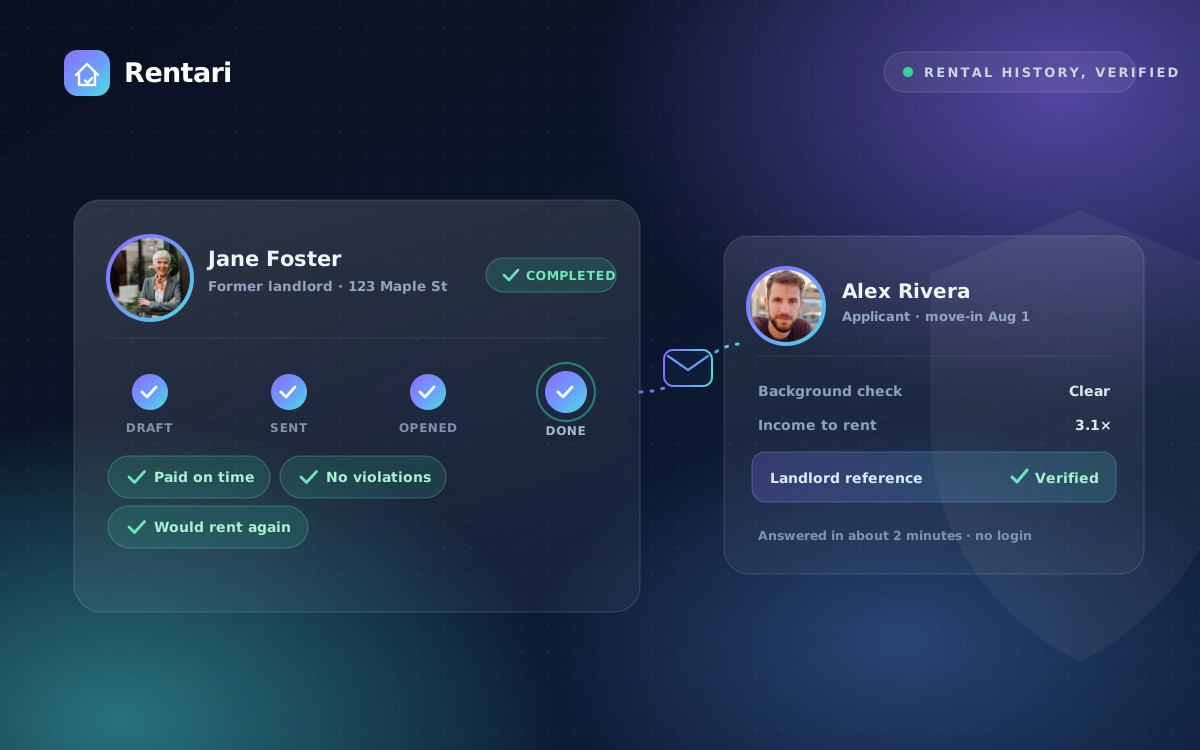
- Former landlords. The one source that captures what never reached a courthouse.
Why the report misses things
A clean eviction report is weaker evidence than most landlords assume, for reasons that have nothing to do with the applicant being dishonest.
Most tenancies that end badly never generate a filing at all. The tenant leaves after the first notice, or takes a cash-for-keys deal, or simply moves out owing money. None of that appears in a court index. Sealed and expunged cases are removed by law in a growing number of states, and several now seal filings automatically when the tenant wins or the case is dismissed. Some jurisdictions also restrict how far back a consumer report may reach, and the FCRA generally caps most adverse civil records at seven years.
Then there is plain data quality. Records are matched on name and date of birth, which produces both false positives on common names and false negatives on a misspelling. Always confirm identity before you act on a hit.
Reading a filing properly
A filing is not a judgment. Cases are dismissed, settled, withdrawn, and decided for the tenant, and all of those can appear in a search. Look for the disposition before anything else.
Then look at the date and the pattern. A single filing five years ago during a documented job loss reads very differently from three filings in four years. Ask the applicant. A candid explanation with dates that match the record is meaningful information, and it is often the fastest way to resolve a mismatched identity.
Staying on the right side of the rules
Three constraints matter here. If you use a screening company, you are using a consumer report, and the FCRA requires written permission from the applicant beforehand and an adverse action notice if the report contributes to a denial. Several states and cities now limit or prohibit using eviction records entirely, particularly sealed cases, dismissed cases, or anything beyond a set lookback. And whatever standard you set, apply it identically to every applicant, because inconsistent screening is where fair housing complaints come from.
Write your criteria down before you start screening, not after you see a report. If you want the court records, credit, and criminal history returned together, that is what tenant screening is for, and the former landlord check covers the part no court file ever will.